Research
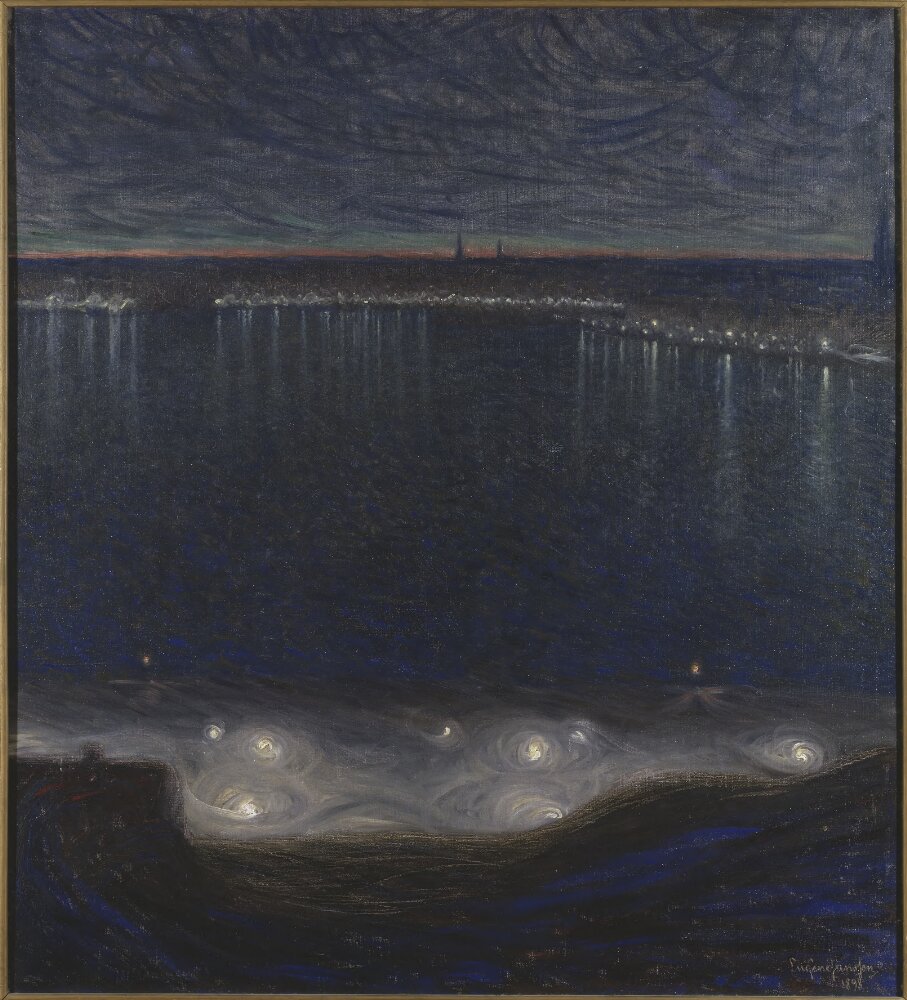
Riddarfjärden i Stockholm. Eugène Jansson, 1898, Nationalmuseum
För mer än hundra år sedan var Stockholm, liksom andra europeiska städer, upplyst av gasljus. Målaren Eugène Jansson, ofta kallad ”den blå målaren”, fångade stadens skimrande gasljus i mörkret. Sedan dess har nya ljuskällor utvecklats, och i takt med förändrade behov har den totala ljusmängden i våra städer ökat.I dag dominerar LED-tekniken. Samtidigt som den erbjuder avancerade möjligheter till styrning och anpassning av ljusnivåer, är verkligheten ofta långt ifrån teknikens fulla potential.
Studiens syfte är att dokumentera övergången från äldre ljustekniker till LED i Stockholm och andra städer. Preliminära resultat visar att ljusnivåerna i Stockholm och Köpenhamn inte tycks vara högre med LED än de tidigare var med metallhalogen, vilket kan förklaras av förbättrade styrmöjligheter. Dessa huvudstäder ligger dock i framkant. I mindre städer, där investeringar i styrsystem inte har skett än ser situationen annorlunda ut.Ett ytterligare mål är att synliggöra utmaningen i att planera belysning på mer rimliga nivåer utan att kompromissa med gestaltning och trygghet. På sikt är ambitionen att resultaten ska ligga till grund för en föreläsning inom ljusutbildningar.
Forskningen bedrivs parallellt med konsultverksamheten och möjliggörs genom stöd från Glödlampsfabrikernas stipendiefond samt Bertil Svenssons stiftelse.
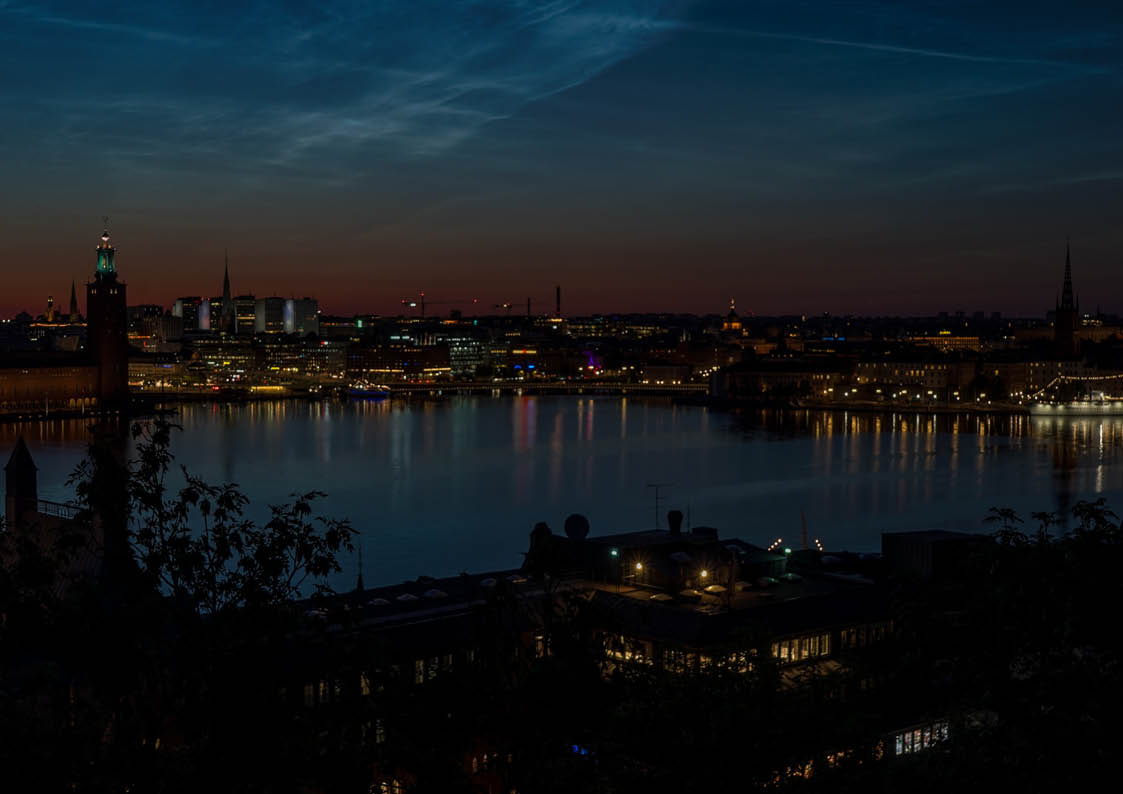
Riddarfjärden idag
More than a hundred years ago, Stockholm, like other European cities, was illuminated by gaslight. The painter Eugène Jansson, often called “the blue painter,” captured the city’s gaslight shimmering in darkness. Since then, new light sources have been developed, and as needs have changed, the total amount of light in our cities has increased. Today, LED technology dominates. At the same time as it offers advanced possibilities for controlling and adapting light levels, reality is often far from the technology’s full potential.
The purpose of the study is to document the transition from older lighting technologies to LED in Stockholm and other cities. Preliminary results indicate that light levels in Stockholm and Copenhagen do not appear to be higher with LED than they previously were with metal halide, which may be explained by improved control capabilities. However, these capitals are at the forefront. In smaller cities, where investments in control systems have not yet been made, the situation looks different.Another objective is to highlight the challenge of planning lighting at more reasonable levels without compromising design quality and safety. In the long term, the ambition is for the results to form the basis of a lecture within lighting education programs.
The research is conducted in parallel with consultancy work and is made possible through support from the Glödlampsfabrikernas Scholarship Fund and the Bertil Svensson Foundation.
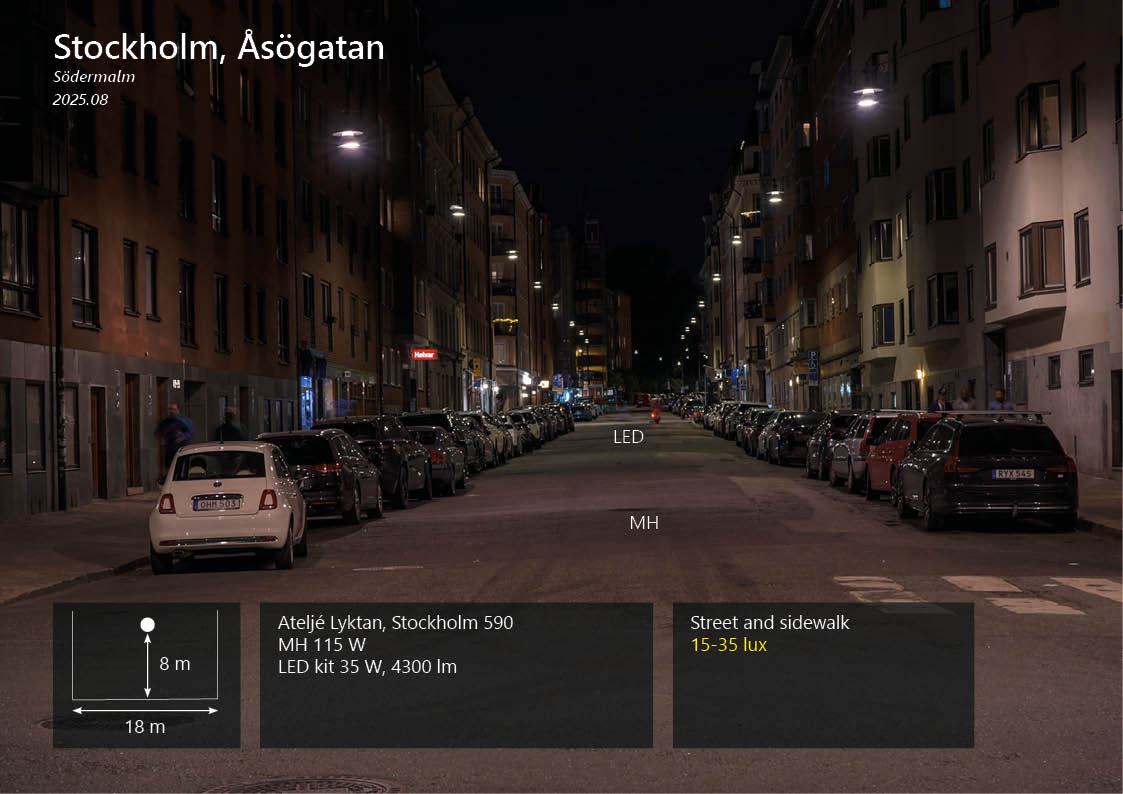
Åsögatan, a common secondary street in stockholm with 2 fixtures on catenary
The same fixture with both metalhalide and Led shows sames light levels
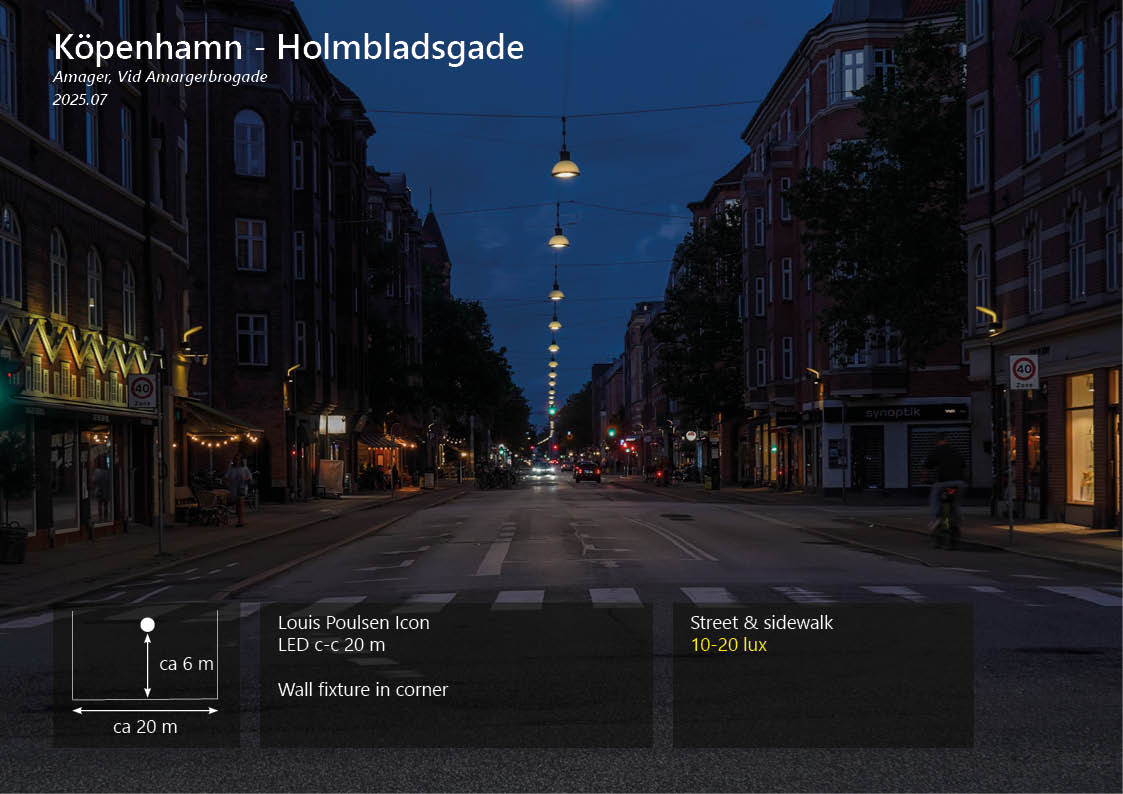
A common secondary street in Copenhagen wiht only one fixture on catenary
The fixture newly changed to LED allowed to control the level, here dimmmed at 50 % (after 11 pm)